
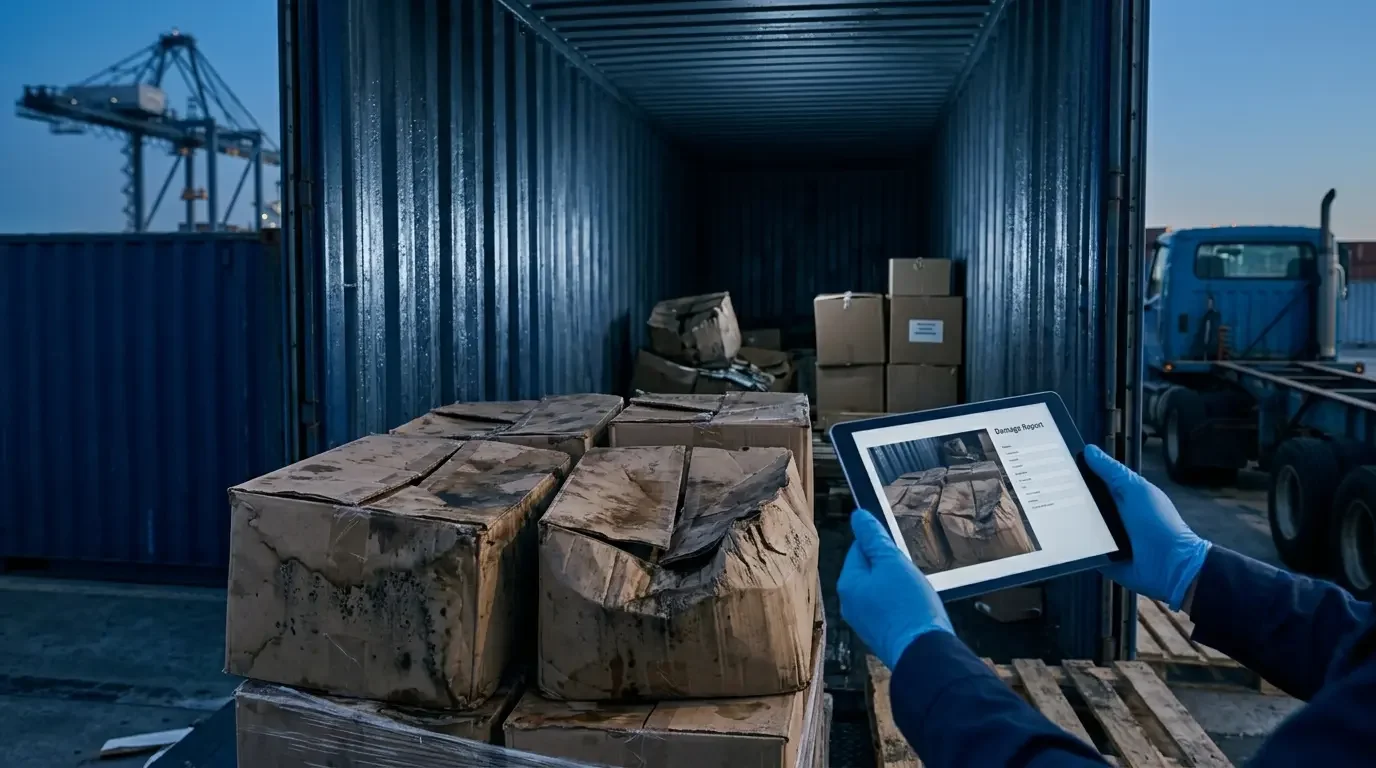
A container is opened at the warehouse and the cargo inside is wet, crushed, moldy, or contaminated. The first instinct is to get rid of it and make space. That instinct can cost the importer the insurance claim.
Damaged import cargo is a claims problem before it is a disposal problem. The order of the steps matters, and some of them have deadlines measured in days. This guide covers how surveys, salvage, carrier notice, and destruction fit together.
Do Not Dispose of Anything Yet
The most common mistake is destroying or discarding damaged goods before the insurer has had a chance to see them. Most marine cargo policies require the insured to notify the insurer promptly and allow a survey. If the evidence is gone before the surveyor arrives, the claim can be reduced or denied.
Keep the cargo, the container, and the packaging as they were found, as far as safety allows. Photograph everything before moving it.
Notify the Carrier Promptly
Claims against the ocean carrier for loss or damage are subject to notice requirements. Under the Carriage of Goods by Sea Act, written notice of loss or damage should be given at the time of removal of the goods, or within three days if the damage is not apparent. Failing to give timely notice does not always defeat the claim, but it makes it harder to prove. Suits against the carrier must generally be brought within one year of delivery.
Your insurer will usually pursue the carrier on your behalf after paying the claim, but only if the right to do so has been preserved. Prompt notice protects that right.
The Survey
An independent surveyor appointed by the insurer, or a joint survey with the carrier, documents the damage, the likely cause, and the extent of the loss. The surveyor will often recommend what should happen to the damaged goods: reconditioning, sale for salvage, or destruction.
Common causes of damage that surveyors identify include:
- Container rain, where condensation soaks the cargo during the voyage
- Water ingress through holes or damaged door seals
- Temperature excursions on refrigerated cargo
- Poor stowage, crushing, or load shift
- Contamination from co-loaded cargo or a previous load
- Pest infestation
Salvage Versus Destruction
Insurers generally prefer to recover value through salvage sales when the goods can still be sold. Salvage reduces the net claim, and the proceeds usually go to the insurer once the loss is paid.
The importer may have good reasons to object. Damaged goods sold through salvage channels still carry the brand, and if they are unsafe or of poor quality, customers will blame the brand. Many policies include a brand or label clause that allows the insured to require destruction of branded goods or removal of brand identification, sometimes with the cost of destruction covered. Check your policy before agreeing to a salvage sale.
Destruction is often the only option for:
- Food and beverages exposed to water, heat, or contamination
- Pharmaceuticals, supplements, and cosmetics with compromised packaging
- Products with safety implications, such as electronics and children’s products
- Branded goods where the brand owner does not want damaged stock on the market
Customs Status Still Matters
If the damaged cargo has not yet cleared customs, destroying it may require CBP approval or supervision, and it may affect duties owed on the shipment. In some cases, an importer can recover or avoid duties on merchandise that is destroyed under customs supervision. Ask your customs broker before scheduling destruction of cargo that is still under customs control.
What the Destruction Record Must Show
The Certificate of Destruction is often the final document in the claim file. It needs to match the survey report and the shipping documents. It should include:
- The container number, bill of lading, and entry number where applicable
- A description of the goods and the quantities destroyed
- The destruction method, date, location, and facility
- A reference to the survey or claim number if the insurer requests it
A vague certificate that only says goods were disposed of can delay the claim settlement.
Get the Order of Operations Right
At importdestruction.com, we coordinate with surveyors, insurers, and customs brokers so that damaged cargo is destroyed only after the evidence is preserved, and every project closes with a Certificate of Destruction that matches the claim file.
Contact our team today to arrange damaged import cargo destruction at ports across the United States.